

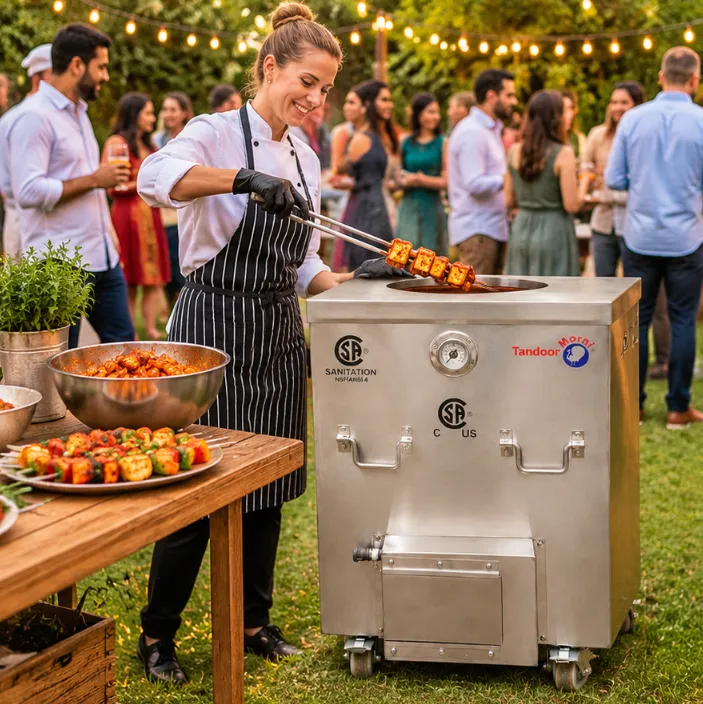
North India’s tandoor has shaped everyday meals, street snacks, and celebratory feasts for generations. Its intense heat gives food a smoky edge, a lightly blistered surface, and a tender center that is difficult to copy in an ordinary oven. Many familiar recipes grew from Punjabi kitchens, roadside dhabas, and the cooking traditions of the wider region. The fifteen Tandoori Dishes explored here show how cooks use the same clay oven for tandoori chicken, kebabs, seafood, vegetables, and bread, while giving each preparation its own character and story.
Tandoori Chicken Classics That Made the Tandoor Famous
Tandoori chicken is often the first dish people picture when they hear the word tandoor. Popularised in restaurants in the twentieth century, it pairs chicken with yogurt, chili, ginger, garlic, and warming spices before the pieces meet the oven’s fierce heat. Chicken tikka uses boneless pieces, making it easy to serve as a starter or wrap filling. Tangri kebab focuses on drumsticks, whose shape and bone help keep the meat juicy. Together, these chicken favorites show how one marinade tradition can create different textures and ways to share a meal.
Punjabi Kebabs Carry Centuries Of Flavor
Seekh kebab is made with seasoned minced meat shaped around long skewers. Its name refers to the skewer, while its soft texture depends on careful mixing and the right balance of fat and spice. Boti kebab takes a different route, using chunks of meat that are marinated and cooked until their edges turn smoky. Both preparations reflect North India’s long history of kebab cooking, shaped by regional kitchens and influences from Central Asia and the Mughal era. At roadside dhabas and family gatherings, they remain popular choices for sharing.
Seafood Tikka Brings Coastal Flavors North
Although North India is far from the coast in many places, tandoori seafood has earned a place on restaurant menus and festive platters. Tandoori fish usually uses firm fillets or steaks coated in yogurt, lemon, chili, and spices, then cooked quickly so the flesh stays moist. Tandoori prawns need even less time; their delicate texture can turn firm if left in the oven too long. These tandoori dishes show the tandoor’s range beyond meat. Their bright marinades and quick cooking also make them a lively contrast to richer kebabs.
Paneer And Mushrooms Give Vegetarians Their Share
Paneer tikka is a familiar vegetarian favorite, with cubes of Indian cottage cheese marinated alongside onion and capsicum before roasting. Malai paneer tikka takes a gentler path, using cream, cashew, or mild spices for a rich, soft finish. Tandoori mushrooms bring a deeper earthy flavor; their hollow caps hold marinade well and develop crisp, browned edges in high heat. These tandoori dishes grew into restaurant staples because the tandoor can create a charred outside without losing the tender center. They make vegetarian platters feel complete rather than secondary.
Potatoes, Cauliflower And Corn Turn Smoky
Vegetables become memorable in a tandoor when their natural sweetness meets a little char. Tandoori aloo uses baby potatoes, often parboiled before they are coated in yogurt, spices, and gram flour. Tandoori gobi gives cauliflower florets a similar treatment, allowing the edges to brown while the centers stay tender. Tandoori bhutta, or corn on the cob, is simpler: the cobs are roasted until lightly blistered, then finished with lemon, salt, chili, or butter. These tandoori dishes connect modern restaurant menus with familiar North Indian food and home cooking.
Naan And Kulcha Complete The Traditional Feast
Naan is perhaps the tandoor’s best-known bread. Cooks stretch soft dough and press it against the hot clay wall, where it puffs and blisters in moments. Kulcha is another North Indian favorite, especially associated with Punjab and Amritsar. It is often made with leavened dough and may be filled with potato, paneer, or onion before baking. Bread has a much older relationship with the tandoor than many of today’s tandoori dishes. Naan and kulcha show how the oven remains central to the meal, not simply a tool for cooking seekh kebabs. In modern restaurant kitchens, commercial tandoor ovens support the preparation of these traditional foods during busy service.
How the Tandoor Became Part of Everyday North Indian Life
The tandoor is far older than most of the tandoori dishes cooked in it today. In many Punjabi villages, a shared community tandoor served several households, where families brought their dough to be baked into fresh rotis. The oven was a gathering place as much as a cooking tool.
Restaurants later carried the tradition into cities, and the same clay oven began to cook marinated meats, paneer and vegetables for a wider audience. That shift is why many of the tandoori dishes in this list feel both traditional and modern.
Today, the tandoor is found in home courtyards, street-side eateries and large restaurant kitchens alike, a reminder that good food travels from village to city.
Many of these recipes were also shaped by travel and trade. Spices, cooking techniques and serving styles moved between regions, and cooks adapted them to local tastes, which is why the same dish can taste a little different in every city.
Learning the background of tandoori dishes also makes eating more enjoyable. A simple plate of seekh kebabs or a basket of naan feels richer when you know how the recipe traveled from village kitchens to today’s tables.

Tips for Enjoying Tandoori Dishes at Home
You do not need to cook all fifteen tandoori dishes at once. Choose one bread, one meat or paneer dish and one vegetable, and build a balanced meal around them. Add chutney, sliced onion and lemon to complete the table.
Marinate ahead, cut ingredients evenly and keep skewers well spaced. A hot, properly maintained clay oven handles the rest.
Pair rich seekh kebabs with lighter sides, such as salad or yogurt dips, so the meal does not feel heavy. With a little planning, a single evening can bring several North Indian food classics to your table.
Do not forget the sweet finish. Many North Indian food lovers end meals with a simple dessert or a cup of hot tea, which gives a pleasant break after all that smoky, spiced food.
Cooking these tandoori dishes is also a good way to connect with food traditions. Sharing the meal with family and friends keeps the stories behind each recipe alive.
Conclusion
These fifteen tandoori dishes reveal why the North Indian tandoor remains so loved: it brings different ingredients together through heat, skill, and a shared North Indian food culture. From richly marinated tandoori chicken and kebabs to seafood, vegetables, naan, and kulcha, each dish carries its own texture and place at the table. The stories continue as home cooks and professional chefs adapt old methods to modern kitchens. For readers interested in exploring the oven behind these flavors, tandoormorni.com offers more information about tandoor cooking and equipment for today’s cooks.